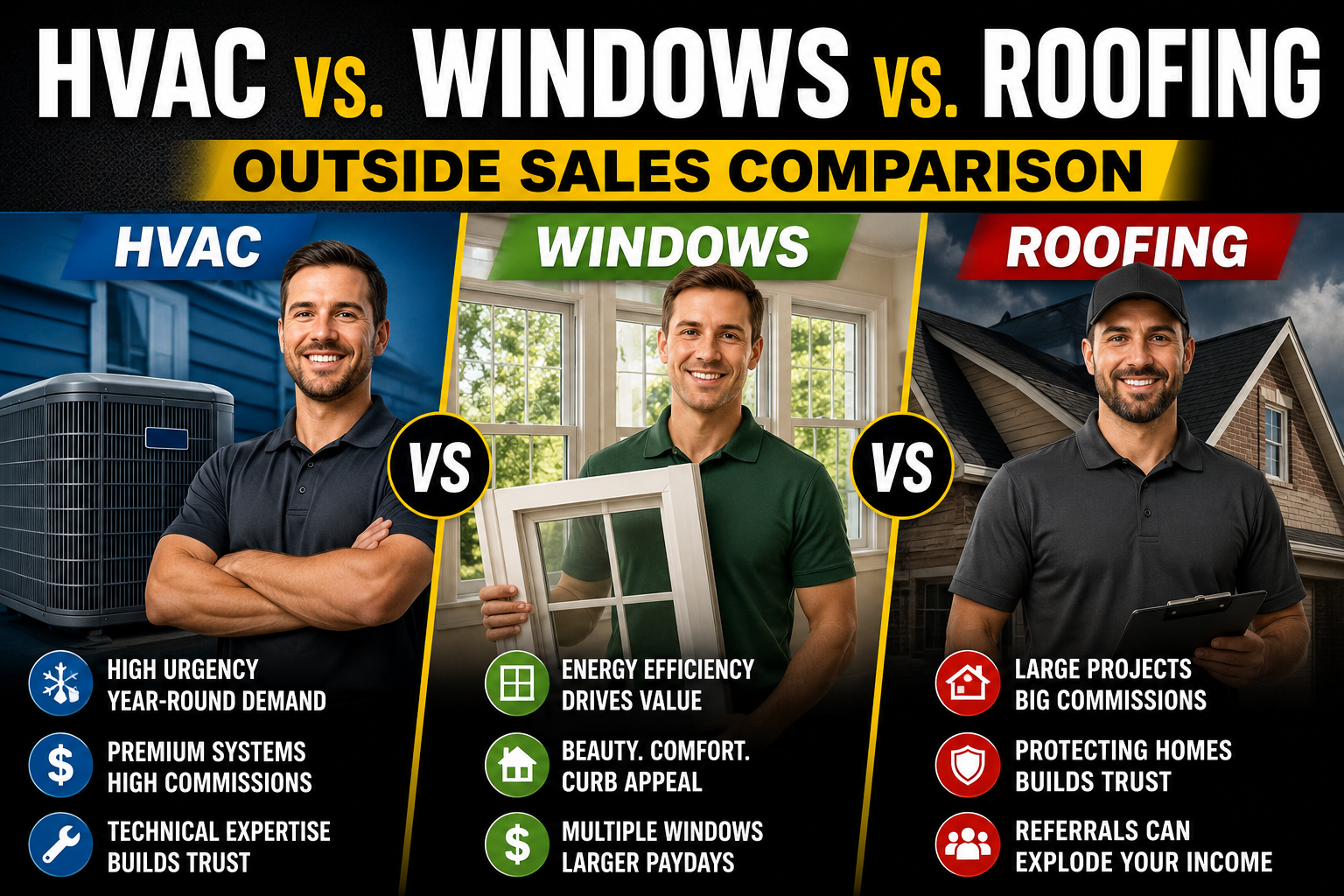
The home improvement sales industry is one of the largest commission-driven sectors in the United States, offering professionals the opportunity to sell high-value products directly to homeowners. Whether you’re researching HVAC sales, replacement window sales, or roofing sales, understanding the differences between these industries is essential.
While each industry falls under the umbrella of outside sales, they differ in customer motivation, sales cycles, lead generation, product knowledge, project size, installation timelines, financing options, and the overall sales process. Every outside sales representative, sales consultant, or home improvement sales professional develops a unique approach based on the products they sell and the homeowners they serve.
This guide compares HVAC sales vs. window sales vs. roofing sales, highlighting the advantages, challenges, and unique characteristics of each industry without declaring one superior to another.
Understanding Home Improvement Sales
Unlike retail or low-ticket consumer sales, home improvement sales focuses on helping homeowners make significant investments in their properties. Projects often improve comfort, safety, durability, energy efficiency, curb appeal, or long-term home value.
Because projects frequently range from several thousand dollars to tens of thousands of dollars, many outside sales jobsin home improvement revolve around high-ticket sales, consultative selling, relationship building, and personalized in-home presentations.
Home improvement sales professionals commonly work as:
- Outside Sales Representatives
- Home Improvement Sales Consultants
- Territory Sales Representatives
- Field Sales Representatives
- Residential Sales Consultants
- Remodeling Consultants
- Sales Advisors
- In-Home Sales Specialists
Rather than simply selling products, successful professionals identify homeowner needs, educate customers, recommend solutions, explain financing, present warranties, and guide buyers through the purchasing process.
HVAC Sales
HVAC sales focuses on residential heating, ventilation, and air conditioning systems. Sales consultants meet homeowners to inspect existing equipment, evaluate system performance, discuss comfort concerns, calculate equipment sizing, and recommend replacement or upgraded systems.
Modern HVAC systems frequently include:
- Central air conditioning
- Furnaces
- Heat pumps
- Variable-speed systems
- Smart thermostats
- Indoor air quality products
- Air purification systems
- Whole-home humidifiers
- High-efficiency equipment
Many HVAC appointments originate from customers experiencing equipment failure, aging systems, rising utility bills, or inconsistent indoor temperatures.
Benefits of HVAC Sales
High Customer Urgency
One of the defining characteristics of HVAC sales is urgency. When heating or cooling systems fail, homeowners often need a solution quickly, especially during periods of extreme weather. This can lead to faster purchasing decisions than in some planned remodeling projects.
Strong Consumer Demand
Nearly every home depends on reliable heating and cooling. Whether replacing aging equipment or upgrading to improve efficiency, HVAC systems remain a consistent category within the home improvement industry.
High-Ticket Sales Opportunities
Complete HVAC system replacements, ductwork improvements, indoor air quality upgrades, and premium equipment packages can create substantial project values, making HVAC a common example of high-ticket home improvement sales.
Technical Expertise Builds Credibility
HVAC consultants who understand energy efficiency, equipment performance, airflow, and installation practices are often better equipped to educate homeowners and answer detailed technical questions.
Repeat Business
Many HVAC companies offer maintenance agreements, seasonal inspections, and equipment upgrades, creating opportunities for repeat customers and long-term relationships.
Challenges of HVAC Sales
- Larger technical learning curve
- Seasonal demand fluctuations
- Emergency appointment scheduling
- Product certifications and manufacturer training
- Extensive product knowledge requirements
Window Sales
Replacement window sales centers on helping homeowners improve energy efficiency, comfort, appearance, and home value through new window installations.
Window consultants evaluate existing windows before recommending products based on:
- Window style
- Frame materials
- Glass packages
- Energy efficiency ratings
- Noise reduction
- UV protection
- Installation methods
- Warranty coverage
Unlike emergency purchases, replacement windows are frequently part of planned remodeling projects.
Benefits of Window Sales
Excellent Product Demonstration
Windows are among the easiest home improvement products to demonstrate visually. Homeowners immediately notice improvements in appearance, operation, natural light, and curb appeal.
Large Project Values
Many homes require multiple replacement windows. Projects involving ten, fifteen, or twenty windows can generate significant contract values and attractive commissions.
Energy Efficiency
Energy-efficient windows remain a major selling point. Homeowners often seek reduced heating and cooling costs, improved insulation, better indoor comfort, and enhanced resale value.
Consultative Selling Environment
Window sales emphasize education and consultation. Sales professionals help homeowners compare frame materials, glazing options, warranties, installation methods, and financing programs.
Less Technical Complexity
Although product knowledge remains important, many sales consultants find replacement windows less mechanically complex than HVAC equipment.
Challenges of Window Sales
- Longer homeowner decision-making process
- Increased price comparison between companies
- Highly competitive marketplace
- Greater emphasis on financing options
- Seasonal buying patterns in some regions
Roofing Sales
Roofing sales involves evaluating residential roofing systems, identifying damage or aging materials, and recommending roof repair or roof replacement solutions.
Roofing consultants frequently educate homeowners about:
- Asphalt shingles
- Metal roofing
- Synthetic roofing materials
- Architectural shingles
- Ventilation
- Flashing systems
- Underlayment
- Manufacturer warranties
Appointments may come from marketing campaigns, referrals, inspections, neighborhood canvassing, or storm-related inquiries.
Benefits of Roofing Sales
Large Contract Values
Roof replacement projects commonly represent some of the highest-value residential construction projects. Large project sizes often create meaningful commission opportunities.
Essential Home Protection
A properly functioning roof protects every other part of the home. Water intrusion, structural damage, and weather exposure make roofing one of the most important home improvement investments.
Strong Referral Potential
Satisfied roofing customers frequently recommend contractors to neighbors, family members, and friends, especially after neighborhood projects or severe weather events.
Visual Need
Roof inspections often reveal visible wear, missing shingles, storm damage, aging materials, or leaks that homeowners can understand through photos and inspections.
Neighborhood Marketing Opportunities
Roofing companies often benefit from completing multiple projects within the same community, increasing visibility and referral opportunities.
Challenges of Roofing Sales
- Outdoor work in varying weather conditions
- Roof inspections requiring ladder use
- Physical demands compared to some other sales roles
- Competitive local markets
- Insurance-related education in restoration-focused markets
Comparing the Sales Process
Although all three industries rely heavily on consultative selling, customer relationship management, and face-to-face outside sales, the customer journey differs.
HVAC sales frequently begin with comfort problems or equipment failure, leading to faster consultations.
Window sales often involve homeowners planning upgrades for efficiency, appearance, or long-term value, which may include additional research before purchasing.
Roofing sales typically start with visible roof aging, leaks, inspection findings, or storm damage, prompting homeowners to evaluate repair or replacement options.
Regardless of product category, successful home improvement sales consultants focus on identifying homeowner needs, presenting appropriate solutions, explaining financing, discussing warranties, and building trust throughout the sales presentation.
Shared Skills Across All Three Industries
Whether selling HVAC systems, replacement windows, or roofing projects, top-performing outside sales professionalsrely on many of the same core skills:
- Prospecting and lead management
- Consultative selling
- In-home sales presentations
- Customer relationship building
- Objection handling
- Product demonstrations
- Closing techniques
- Financing discussions
- Time management
- Territory management
- CRM software
- Referral generation
- Follow-up communication
- Negotiation
- Presentation skills
- Homeowner education
These transferable skills make home improvement sales one of the most versatile sectors within the broader sales profession.
Common Similarities
Despite their differences, HVAC, window, and roofing sales share many characteristics:
- High-ticket residential sales
- Face-to-face customer interactions
- Performance-based compensation
- Commission opportunities
- Relationship-driven selling
- Homeowner consultations
- Product presentations
- Financing options
- Warranty discussions
- Strong referral potential
- Local territory management
- Customer education
- Home inspections or evaluations
- Professional sales presentations
Final Comparison
HVAC sales, replacement window sales, and roofing sales each play a critical role within the home improvement industry. All three involve helping homeowners invest in the comfort, efficiency, protection, and long-term value of their homes through professional outside sales consultations.
While the products, buying motivations, sales cycles, and technical requirements differ, each industry relies on consultative selling, customer education, relationship building, and personalized recommendations. Understanding these distinctions can help homeowners better appreciate the purchasing process and help sales professionals broaden their knowledge of the residential remodeling market.
Whether researching HVAC sales, window sales, roofing sales, or the broader field of home improvement sales, recognizing the similarities and differences between these industries provides valuable insight into how residential sales professionals help homeowners make informed decisions about some of their largest investments.